Expert Hydraulic Power Unit Assembly and Custom System Design
When your application demands reliable hydraulic power unit assembly that delivers consistent performance under demanding conditions, Pearse Bertram's engineering team brings more than 70 years of hydraulics expertise to your project. Our engineers work directly with your team to design, build, and test hydraulic systems that provide the precise force and control your operations require, from compact 1/2 horsepower units to robust 200 horsepower power systems.
We understand that hydraulic systems represent critical components in your manufacturing processes, material handling equipment, and automated machinery. A poorly designed hydraulic power unit can lead to productivity losses, maintenance headaches, and safety concerns. Our systematic approach to hydraulic system design ensures your equipment operates reliably while meeting all performance specifications and industry standards.
Comprehensive Hydraulic System Design and Engineering Services
Our hydraulic engineering capabilities span the complete project lifecycle, from initial concept development through final testing and commissioning support. We collaborate closely with your engineering team to understand your specific force requirements, duty cycles, environmental conditions, and integration needs before designing a hydraulic solution that addresses every operational detail.
The foundation of effective hydraulic system design lies in thorough analysis of your application requirements. Our engineers evaluate factors including required operating pressures, flow rates, duty cycles, ambient conditions, and space constraints to design systems that optimize performance while maintaining long-term reliability. This methodical approach ensures your hydraulic power unit delivers the power you need without unnecessary complexity or cost.
Custom hydraulic power units in our facility range from 1/2 HP through 200 HP, accommodating applications from small machine tools to large industrial presses and material handling systems. We design units for operating pressures up to 30,000 PSI for specialized aerospace and defense applications, though most industrial systems operate in the 1,000-3,000 PSI range where reliability and efficiency are paramount.
Technical Capabilities and Quality Standards
Our ISO 9001:2015 certification reflects our commitment to consistent quality throughout the hydraulic power unit assembly process. Every system we build follows documented procedures that ensure proper component selection, assembly techniques, and testing protocols. This quality-focused approach has resulted in a return rate of less than 0.5 percent across all our manufacturing services, including hydraulic systems.
Key technical capabilities include:
Ask an Expert
Have questions about custom hydraulic power units or need guidance on hydraulic system design for your specific application? Our experienced hydraulic engineers are ready to discuss your requirements and recommend solutions.
Custom Hydraulic Manifolds and Component Integration
Effective hydraulic system design often requires custom hydraulic manifolds that consolidate multiple valve functions while minimizing potential leak points and simplifying maintenance access. Our engineers design manifolds using modern CAD software and can incorporate standard cartridge valves, proportional valves, and custom-drilled circuits that meet your specific control requirements.
Manifold design represents a critical element in hydraulic system performance. Poor manifold design can create excessive pressure drops, generate heat, and complicate troubleshooting efforts. Our engineers optimize port locations, passage sizing, and component mounting to ensure your manifold delivers reliable performance while remaining serviceable for maintenance activities.
We work with aluminum, steel, and ductile iron manifold materials depending on your pressure requirements, weight constraints, and environmental conditions. Surface treatments including anodizing, powder coating, and zinc plating protect manifolds in corrosive environments or outdoor installations. Each manifold undergoes pressure testing before integration into your hydraulic power unit to verify structural integrity and leak-free operation.

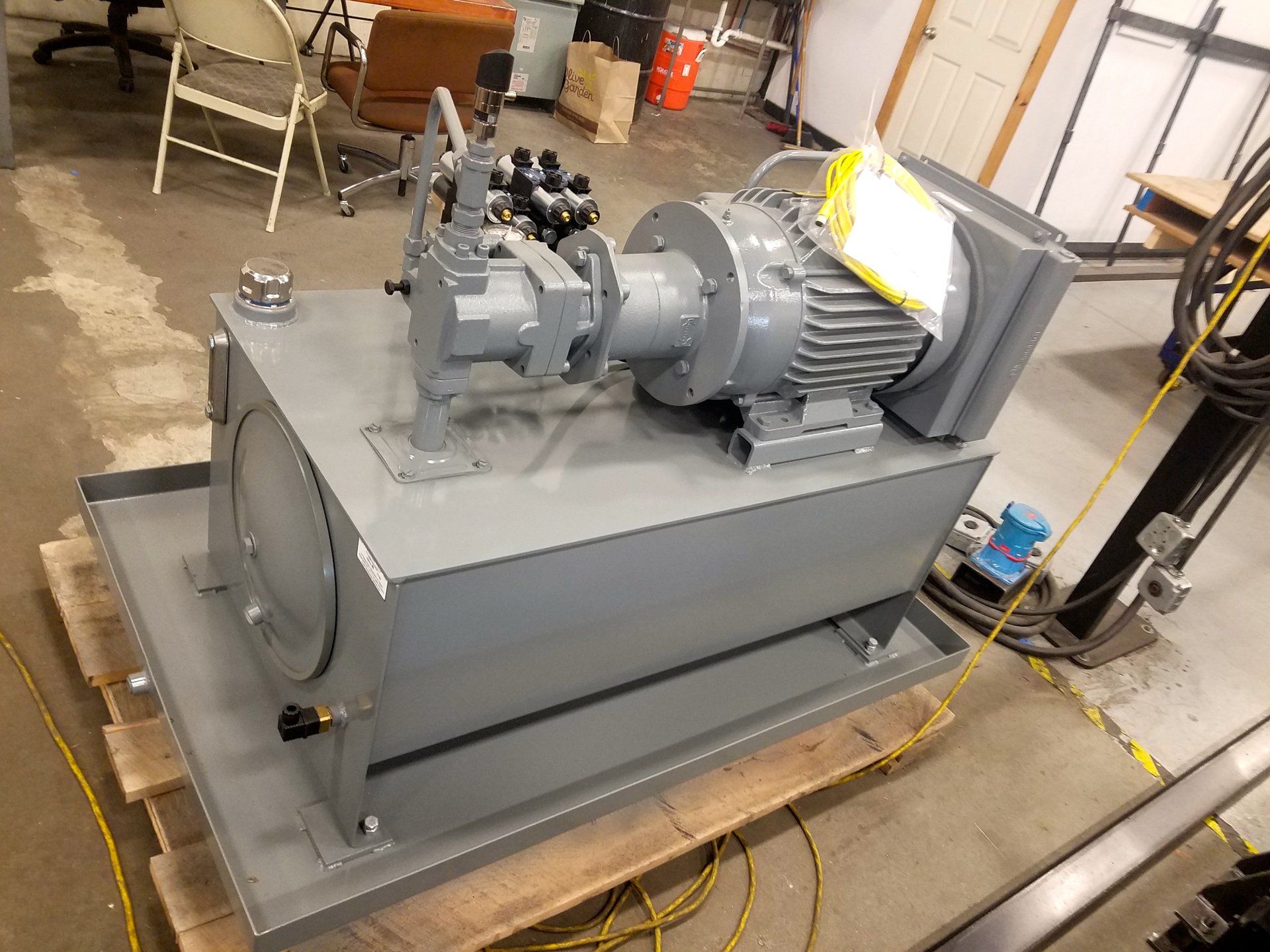
Industry-Specific Hydraulic Solutions
Our hydraulic system design experience spans multiple industries, each presenting unique technical challenges and performance requirements. We understand that aerospace applications demand different design considerations than industrial manufacturing or mobile equipment, and we tailor our approach accordingly.
Aerospace and defense applications often require hydraulic testing systems capable of pressures up to 30,000 PSI with precise pressure control and comprehensive data acquisition. Our engineers have designed test systems for landing gear components, flight control actuators, and hydraulic brake systems where performance verification is critical for safety certification.
Industrial manufacturing environments typically utilize hydraulic power units for presses, injection molding machines, material handling equipment, and automated assembly systems. These applications prioritize reliability and ease of maintenance while meeting demanding duty cycles. Our designs incorporate readily available components, clear documentation, and straightforward troubleshooting procedures that support your maintenance team.
Water treatment and process control applications benefit from hydraulic systems designed to operate in challenging environmental conditions. Corrosion-resistant components, appropriate seals for fluid compatibility, and enclosure designs that protect electrical components ensure reliable operation in humid or outdoor installations.
Industry-Specific Hydraulic Solutions
Our hydraulic power unit assembly projects begin with detailed consultation to understand your application requirements, performance objectives, and integration needs. We work with your engineering team to review specifications, identify potential design challenges, and recommend solutions that balance performance with practical considerations including budget, timeline, and maintainability.
During the design phase, our engineers create detailed hydraulic schematics and system layouts for your review and approval. We select components from trusted manufacturers including Continental, Anfield, and Sheffer based on proven reliability and availability. This collaborative approach ensures the final design meets all technical requirements while remaining practical for manufacturing and maintenance.
Fabrication follows our ISO 9001:2015 quality procedures with attention to cleanliness, proper assembly techniques, and documentation. Hydraulic systems require meticulous attention to contamination control during assembly. Our technicians follow strict cleanliness protocols and use filtration systems that ensure your hydraulic power unit begins operation with clean fluid and properly flushed components.
Testing capabilities at our Bloomfield, Connecticut facility include complete functional testing of hydraulic systems before shipment. We verify operating pressures, flow rates, temperature rise, and control system operation under load conditions that simulate your application requirements. This comprehensive testing approach identifies and resolves issues before equipment reaches your facility, reducing commissioning time and startup complications.
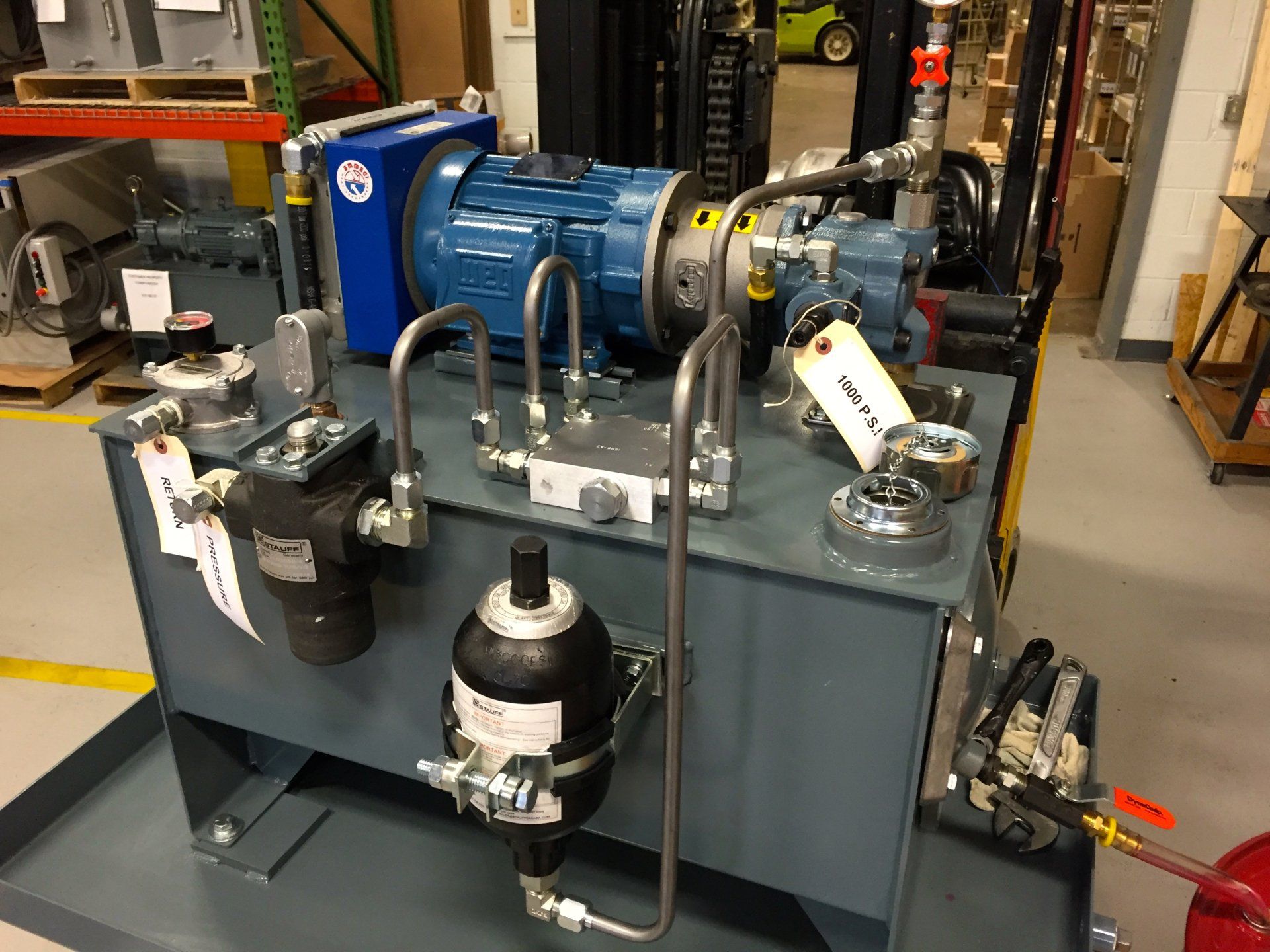
New England Hydraulics Engineering Expertise
Serving New England manufacturing for more than seven decades has given us deep familiarity with regional industries, operating conditions, and technical resources. Our Bloomfield, Connecticut location provides convenient access to manufacturers throughout Connecticut, Massachusetts, Rhode Island, Vermont, New Hampshire, and increasingly New York and New Jersey as we expand our service area.
Regional expertise matters when selecting hydraulic components and designing systems for local conditions. New England's temperature extremes require attention to fluid selection, seal materials, and warm-up procedures that ensure reliable operation during winter months. Our engineers incorporate these regional considerations into every hydraulic system design.
Strong relationships with component suppliers throughout New England enable us to source quality hydraulic components quickly and cost-effectively. When standard components don't meet your requirements, we can design and fabricate custom solutions including specialty manifolds, mounting brackets, and reservoir configurations that integrate seamlessly with your equipment.
FAQs
What hydraulic applications do you support?
We design and assemble virtually every type of hydraulic assembly and product imaginable including hydraulic systems for presses, material handling, clamping, lifting, molding machines, and process control. Our engineers work with systems from simple power units to complex proportional and servo-controlled applications.
How do I know if I need hydraulic or pneumatic power?
Hydraulics are ideal when you need high force in compact spaces, precise positioning, or smooth motion control. Pneumatics work well for lower force applications where some compressibility is acceptable. Our engineers evaluate your force requirements, stroke length, precision needs, and environment to recommend the optimal solution.
What causes hydraulic system overheating?
Common causes include insufficient reservoir size, inadequate cooling capacity, internal leakage, excessive system pressure, contaminated fluid, or restricted flow paths. We diagnose overheating issues and recommend solutions including proper heat exchanger sizing and system optimization.
How often should I change hydraulic fluid?
Change intervals depend on operating conditions, contamination levels, and fluid type. Most industrial systems require fluid changes every 1,000-2,000 operating hours or annually. Regular fluid analysis helps establish optimal change intervals for your specific application.
Can you design custom hydraulic power units?
Yes, we design and fabricate custom hydraulic power units sized for your specific flow, pressure, and control requirements. Each unit is engineered with proper pump selection, reservoir sizing, filtration, cooling, and control integration.
What causes pump failure in hydraulic systems?
Common causes include contaminated fluid, cavitation, excessive pressure, improper fluid viscosity, lack of lubrication, or mechanical wear. Proper filtration, fluid maintenance, and correct pump sizing prevent most failures.
Do you provide hydraulic system retrofits and upgrades?
Yes, we upgrade older systems with modern proportional valves, servo controls, variable speed drives, and improved filtration. Many upgrades improve energy efficiency, precision, and reliability while extending system life.
How do I size a hydraulic cylinder for my application?
Cylinder sizing depends on force requirements, stroke length, speed needs, and mounting configuration. Our engineers calculate required bore size based on your force and pressure parameters, then select appropriate rod diameter and mounting style.
Can you help diagnose slow or erratic cylinder movement?
Yes, slow or erratic movement typically indicates flow restrictions, internal leakage, control valve problems, or air in the system. Our engineers systematically diagnose these issues and recommend appropriate repairs.
Request for Quote
Get detailed specifications and pricing for your hydraulic power unit assembly project. We provide comprehensive quotes including technical details, timeline, and complete project scope.